Done. Fini. Terminado.
Check out some of the VVSRL’s recently completed projects below. You’ll find brief descriptions and links to project leads and collaborators and some of the project publications and presentations.
An Assessment of Labor Trafficking in Nebraska
This Howard G. Buffett Foundation funded project sought to provide an overview of labor trafficking in Nebraska and actionable items on how the state can improve identification and responses. The project team included Teresa Kulig, Ph.D. (PI) and Sadaf Hashimi, Ph.D. (Co-PI), as well as graduate research assistants Kaitlyn Swanberg, Valeria Torres-Rivera, and Morgan Goslar. The guiding research objectives included (1) assessing the nature of trafficking in the state, (2) identifying the challenges of law enforcement and legal actors when investigating labor trafficking, and (3) identifying the challenges of service providers when responding to labor trafficking survivors. The project’s findings and recommendations will serve as a valuable resource for individuals and organizations dedicated to combating these crimes. See the full report below.
Identifying the Scope and Context of Missing and/or Murdered Indigenous Persons (MMIP) in New Mexico and Improving MMIP Data Collection, Analysis, and Reporting
This National Institute of Justice funded-project (15PNIJ-22-GG-01625-REVA) supported a collaboration between the New Mexico Department of Indian Affairs (IAD) and the New Mexico Missing and Murdered Indigenous Women & Relatives Task Force and researchers at UNO. Co-Investigators included UNO’s Tara Richards, Ph.D. and Urban Institute’s Emily Wright, Ph.D. with UNO doctoral student, Alvi Ali assisting on the project. This collaboration comprised a replication and extension of Richards and Wright’s 2019 NIJ tribal-researcher capacity-building partnership project (Grant ID 2019-75-CX-0014), which conducted a pilot study on the scope of missing Native persons in Nebraska and provided a replicable model for other states to employ. The NM study aimed to address two broad goals: 1) to use the “Nebraska Model” developed in the pilot study to examine the scope and context of MMIP in New Mexico and 2) to extend prior research by identifying gaps in current data collection and provide recommendations for improving long-term data collection and sustainable data reporting for cases of MMIP in New Mexico. Preliminary results were presented at the Office on Violence Against Women’s 19th Annual Government-to-Government Tribal Consultation on November 19, 2024 (slides below); the presentation was also covered in an article in The Sante Fe New Mexican.
We also partnered with the Coalition to Stop Violence Against Native Women to host focus groups with tribal community members impacted by MMIP and developed a brief report from the focus groups.
The final report submitted to the National Institute of Justice (compliant with all Presidential EOs) is also listed below.
Secondary Analysis of the Association of American Universities Campus Climate Survey on Sexual Assault and Misconduct
Dr. Brittany Hayes (University of Cincinnati and Friend of the Lab) and UNO faculty members Dr. Tara Richards and Dr. Lane Gillespie completed a series of studies using the AAU Campus Climate Survey data to examine predictors of sexual misconduct victimization and reporting among college student survivors. The AAU Campus Climate Survey data includes nearly 180,000 students from 33 American colleges.
Examining the Prevalence of Experiencing Sexual Misconduct and Reporting to Title IX and Counseling Services across Student Race/Ethnicity: Findings from the 2019 Association of American Universities Survey
This study published in Criminology and Public Policy examined the prevalence of experiencing sexual misconduct—rape, contact sexual violence, sexual harassment—in college and whether students reported to Title IX coordinators or campus counseling services by students’ race/ethnicity. We found that 44.70% of students in the AAU sample experienced sexual misconduct victimization; among victim-survivors who contacted a program, 19.85% reported to Title IX and 45.63% contacted campus counseling services. Black students did not significantly differ from White students in their experiences with sexual misconduct, Asian students were significantly less likely than White students to experience all types of sexual misconduct. Black and Asian students had lower odds of reporting sexual misconduct to Title IX (though results vary by type of misconduct), but Black students had higher odds of reporting to campus counseling services across all types of sexual misconduct.
Sexual Misconduct Prevention Education and Reporting to Title IX Coordinators Among College Students
This study published in Journal of School Violence and led by UNO Ph.D. student Alvi Ali, examined the relationship between sexual misconduct training, the content of training, and reporting to Title IX coordinators versus to another campus designated program/resource. Results showed that training in general is not related to reporting to Title IX coordinators; however, training content: the definition of sexual misconduct and where to seek help, was associated with increased odds of reporting to Title IX coordinators versus to another campus designated program/resource.
Exploring the Likelihood of Experiencing and Subsequently Reporting Sexual Misconduct among U.S. College Students with a Disability
This study published in Law & Human Behavior examined the prevalence of experiencing sexual assault in college and whether students reported to campus-designated programs/resources among students with and without disabilities. We also examined whether registration with accessibility services would impact reporting among student survivors with disabilities. We found that students across disability types were more likely than students without disabilities to experience sexual victimization. Among student survivors, students with disabilities were more likely to report their victimization to at least one program/resource than students without disabilities. Further, student survivors who were registered with the campus accessibility office had a higher likelihood of reporting to each program/resource examined. Post-print available at CrimRXIV.
Experiences of Sexual Assault and Reporting Decisions among Gender and Sexual Minorities College Students
The study published in Journal of Criminal Justice, examined the prevalence of experiencing sexual assault in college and whether students reported to campus-designated programs/resources among students with and without disabilities. We also examined whether registration with accessibility services would impact reporting among student survivors with disabilities. We found that students across disability types were more likely than students without disabilities to experience sexual victimization. Among student survivors, students with disabilities were more likely to report their victimization to at least one program/resource than students without disabilities. Further, student survivors who were registered with the campus accessibility office had a higher likelihood of reporting to each program/resource examined. Post-print available at CrimRXIV.
Supportive Services Model for Batterer Intervention
This Office on Violence Against Women funded-project (OVW-2019-SI-AX-0002) assessed whether supportive services for common psychosocial problems (e.g., unemployment, mental health problems, substance abuse, and parenting issues) provided by community partners on site at an abuse intervention program (AIP) – Baltimore, Maryland’s House of Ruth’s Gateway Project – can reduce violent and non-violent criminal re-offending in a high-risk urban sample. Investigators include an inter-university and interdisciplinary team from public health: Charvonne Holiday, Ph.D. (JHU), psychology: Christopher Murphy, Ph.D. (UMBC), and criminology: Tara Richards, Ph.D. (UNO). Community Partners from Baltimore, Maryland’s House of Ruth’s Gateway Project include Ange Manning-Green and Lisa Nitsch. findings provide mixed evidence regarding the expectation that the addition of co-located supportive services would enhance AIP program outcomes as assessed by criminal justice re-offense data.
Findings provide mixed evidence regarding the expectation that the addition of co-located supportive services would enhance AIP program outcomes as assessed by criminal justice re-offense data. In analyses without statistical control variables, re-offense rates for any criminal justice involvement and for domestic abuse or violent offenses were significantly lower for the Supportive Services Cohort in contrast to the Historical Controls. However, in models that adjusted for age, sex, and criminal history, the findings were no longer statistically significant. In all of the models, the extent of criminal history in the past 5 years was a strong predictor of re-offense. Overall, the data showing reductions in criminal re-offense across cohorts are encouraging of continued efforts to improve implementation and further evaluate the supportive service model, while exercising caution in attributing differences to the program implementation thus far. See the full report below.
Nebraska Indian Community College Tribal-Researcher Collaboration
This National Institute of Justice funded project (15PNIJ-21-GG-02809-RESS) supported a new partnership between Nebraska Indian Community College (NICC) and UNO researcher Tara Richards, Ph.D. (PI) and doctoral student research assistants Sheena Gilbert and Alvi Ali as well as Emily Wright, Ph.D. (Co-I, Urban Institute). Consistent with a community-based participatory approach, this project first established a NICC Gender-Based Violence (GBV) Advisory Board with representation from NICC community members (i.e., students, staff, and faculty). The GBV Advisory Board worked collaboratively with UNO/Urban Institute researchers to (1) complete an organizational assessment of NICC’s strengths and needs for the prevention of and response to GBV on campus and among NICC community members, (2) identify areas for new partnerships or where partnerships may be strengthened to increase service capacity for GBV among NICC community members, and (3) develop a culturally centered campus climate survey instrument to assess NICC community members’ experiences with, knowledge of, and access to resources regarding GBV.
Findings from the proposed project supported policy and procedural changes regarding NICC’s response to its community members’ health, wellbeing, and GBV experiences; the culturally centered campus climate survey is available for NICC to identify areas of need and create necessary changes. This collaboration also provides a replicable model for other tribal colleges and universities (TCUs) that are interested in enhancing prevention and intervention efforts for GBV among their own stakeholders. See the full report below.
Minnesota Sexual Assault Kit Research Project
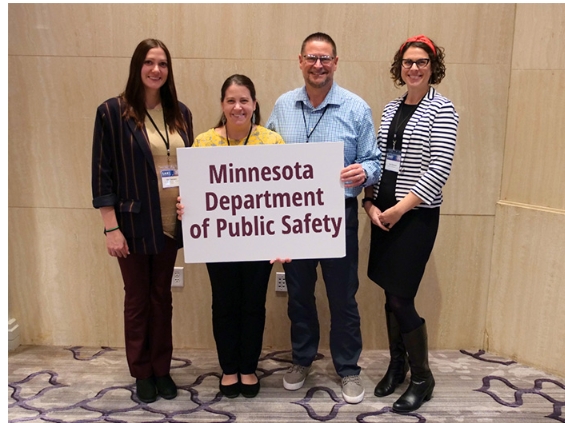
This National Institute of Justice funded-project (NIJ 2019-MU-MU-0095) supported a collaboration between the Minnesota Office of Justice Programs, the Bureau of Criminal Apprehension, the Anoka County Sheriff’s Office, Alexandra House (a victim service provider), the Minnesota Coalition Against Sexual Assault (the statewide coalition of sexual assault programs), and researchers at UNO, University of Louisville (UofL), and Urban Institute. Investigators included UNO’s Tara Richards, Ph.D. and Justin Nix, Ph.D. as well as UofL’s Bradley Campbell, Ph.D. and Urban’s Emily Wright, Ph.D. Doctoral student research assistants, Caralin Branscum, Michaela Goldsmith, and Emily Meinert assisted on the project. This researcher-practitioner partnership aimed to examine the processes, outcomes, and cost-benefits of the MN Sexual Assault Kit Initiative Project. The final report to NIJ can be found here and below. We also compare our findings with those from other SAKI projects in a paper published in Justice Evaluation Journal.
An Evaluability Assessment for Seattle Municipal Court’s Domestic Violence Intervention Project (DVIP)
This Office on Violence Against Women funded project (15JOVW-21-GG-02488-MUMU) supported a formative evaluation and evaluability assessment of a novel approach to domestic violence intervention treatment in Seattle, Washington: The Domestic Violence Intervention Project (DVIP). The project team included Tara Richards, Ph.D. (PI) and doctoral research assistant, Alyssa Nystrom as well as Co-Investigator, Dr. Emily Wright, of the Urban Institute. While the DVIP is founded in Evidenced Based Principles, before determining whether the DVIP model is “effective,” we must determine how well it is being implemented and how evaluable it is. As such, in this formative evaluation and evaluability assessment we examined: (1) the extent to which the program theory aligns with the program implemented, (2) the likelihood the program will produce positive results as currently applied, and (3) the feasibility of outcome evaluations as currently designed. The final report to OVW can be found below.
Disclosures to Health Care Providers
This project focused on developing a conversation tool to garner mental health and intimate partner violence histories from patients seeking pelvic healthcare. The project was led by Dr. Kailey Snyder (UNO Public Health and Friend of the Lab) and supported by clinicians from Creighton University Physical Therapy and Dr. Tara Richards. A 3-stage mixed measures approach with healthcare providers (n = 22) and victim service experts (n = 8) was utilized to meet study aims. The finalized conversation tool was found to have satisfactory face and content validity as well as to be feasible to implement in clinical settings based on constructs related to acceptability, practicality, demand, and implementation. The next steps will focus on pilot testing the developed tool with health professional students and identifying tool dissemination strategies. The study is published in the journal, Violence Against Women.
Intimate Partner Cyber Abuse (IPCA)
This project involved the exploration of the prevalence, incidence, and prevention of intimate partner cyber abuse (IPCA). The primary investigators included Leah C. Butler, PhD (UNO), Erica R. Fissel, PhD (University of Central Florida) and Bonnie Sue Fisher, PhD (University of Cincinnati). The research team developed a new survey instrument to measure the prevalence of IPCA victimization and published research demonstrating the validity and reliability of the measure (Fissel et al., 2021). Other research from the project presented overall IPCA prevalence rates and risk factors from a national sample and analyzed qualitative data to explore the normalization of IPCA behaviors in intimate relationships. UNO SCCJ doctoral student, Brian Gildea, worked with the research team to conduct a study of IPCA victimization among LGBTQ+ individuals and to examine variation in prevalence rates across different types of intimate relationships.
OPD-UNO Collaboration for the Prevention and Intervention of Human Trafficking against Children in Omaha
In 2017, the Omaha Police Department (OPD) Special Victims Unit took the innovative step of collecting data on children who were identified as missing with the aim of better understanding pathways to victimization, including human trafficking, and connecting children to needed services. In 2022, Teresa Kulig, Ph.D. and Tara Richards, Ph.D. along with SCCJ Ph.D. student Michaela Goldsmith, received funding from the Great Plains IDeA-CTR Community Engagement grant program to support a new collaboration with OPD’s Special Victims Unit in this endeavor. The current project seeks to fill a critical information gap in our understanding of the risk and protective factors for human trafficking victimization among children who are missing/run away, as well as how and when interventions should be implemented. The ultimate goal of this project is to advance our understanding regarding prevention of human trafficking in this understudied yet vulnerable group. Study findings are presented in the Final Technical Report below.
Specialty Courts for Human Trafficking Victims
This project conducted a systematic review on trafficking specialty courts in the United States, including evidence of their effectiveness through qualitative and quantitative evaluations. Investigators included Teresa Kulig, PhD., and Leah Butler, PhD. You can check out the study’s findings in Victims & Offenders or the Final Technical Report below.
Mobile Vulnerable Populations in Omaha
This project involved a collaboration between faculty at UNO in the School of Criminology and Criminal Justice (SCCJ), the Office for Latino/Latin American Studies (OLLAS), Religious Studies, and Sociology and Anthropology to examine the needs of Omaha services providers for refugees, migrants, human trafficking victims, and the homeless. The purpose of this project was to complete a systematic review of research on services for the select populations, and to create a database of Omaha networks that could assist these vulnerable individuals. Then, interviews and surveys were used to determine the immediate needs of these community agencies to better serve their clients. Recommendations informed next steps to facilitate these requests. Investigators across UNO included Teresa Kulig, Ph.D., (SCCJ), Laura Alexander, Ph.D., (Religious Studies), Cristián Doña-Reveco, Ph.D., (OLLAS), and Allison Schlosser, Ph.D., (Sociology and Anthropology); Morgan McBride, and Sawyer Stender served as research assistants.
A Formative Evaluation and Evaluability Assessment of an Omaha Child Advocacy Center
This National Institute of Justice funded-project (NIJ 2019-V3-GX-0007) supported a formative evaluation and evaluability assessment of Project Harmony, a large child advocacy center (CAC) in Omaha, Nebraska, currently serving children who are victims of alleged child abuse. Investigators included Teresa, Kulig, Ph.D., Emily Wright, Ph.D., and Ryan Spohn, Ph.D. with Amber Krushas serving as a doctoral student research assistant. The ultimate goal was to lay the foundation for a future CAC outcome evaluation effort. You can check out the study’s findings in the Final Technical Report below.
Promoting Gender and Racial Equity Through Transformative Housing Policies
Funded by a Great Plains IDeA-CTR Team Development Pilot grant, this project examined the connections between domestic and intimate partner violence, eviction, and racial disparities in Omaha through the development of a unique dataset including information on eviction and criminal justice system involvement. Investigators included an inter-university and interdisciplinary team from UNO’s Juvenile Justice Institute: Anne Hobbs, J.D., Ph.D., as well as criminology and criminal justice: Tara Richards, Ph.D. (UNO), psychiatry: Michelle Roley-Roberts, Ph.D. (Creighton University), and sociology: Pierce Greenberg, Ph.D. (Creighton University). UNO SCCJ doctoral students, Brian Gildea and Michaela Goldsmith, served as the graduate research assistants for the project. The team’s findings on the prevalence of DV victimization among those experiencing evictions, and evidence of the “poverty trap” are below.
The ultimate goal of the project was to convene partners from across governmental agencies, community-based non-profits, and mental health clinics to work holistically toward a data-driven, trauma-informed, restorative-justice approach to housing policies. The project culminated with a summit of more than 50 local stakeholders where strengths and areas of need regarding safe and affordable housing were mapped, and next steps for research and policy making were discussed.
“Going Missing” among Children in Foster Care
This project examined the prevalence, predictors, and context of “going missing” among youth in out-of-home care in Nebraska. Investigators include UNO’s Tara Richards, Ph.D. and Alyssa Nystrom in partnership with Nebraska’s Foster Care Review Office (FCRO). This collaboration aimed to offer data-driven recommendations to improve policy and practice for youth in out-of-home care per FCRO’s statutory mandate. Check out the team’s report to the NE legislature and presentation to stakeholders below as well as their article in the Child Abuse and Neglect.
Domestic Violence Help Seeking Before and During COVID-19
This project examined longitudinal data on domestic violence (DV) calls to police and emergency hotlines before and during the COVID-19 pandemic to assess whether one, the other, both, or neither changed as a result of social distancing. Investigators Justin Nix, Ph.D. and Tara Richards, Ph.D. used both official and unofficial data to evaluate the short- and long-terms trends in DV help seeking during the pandemic. For more information check out their presentation to the United Nations 65th Annual Commission on the Status of Women, their rapid report in the journal Police Practice and Research, and their article in Criminology & Public Policy.
Missing and Murdered Native Women and Children in NE
This National Institute of Justice funded-project (NIJ 2019-75-CX-001) supported a new partnership between the Nebraska Commission on Indian Affairs, the Nebraska State Patrol and UNO researchers Tara Richards, Ph.D., Emily Wright, Ph.D., Alyssa Nystrom, Sheena Gilbert, and Caralin Branscum. The research team conducted a pilot study to identify (1) the scope and context of missing American Indian and Alaska Native (AI/AN) women and children in Nebraska, (2) the scope and context of murdered AI/AN women and children in Nebraska, (3) challenges and promising practices regarding reporting and investigation, and (4) data-driven recommendations for developing and strengthening partnerships to increase opportunities for justice and support. Read more about this study and view local news coverage or check out some of the study’s findings in the journal Race and Justice. The NIJ Final Report is available below.
 VVSRL
VVSRL 